
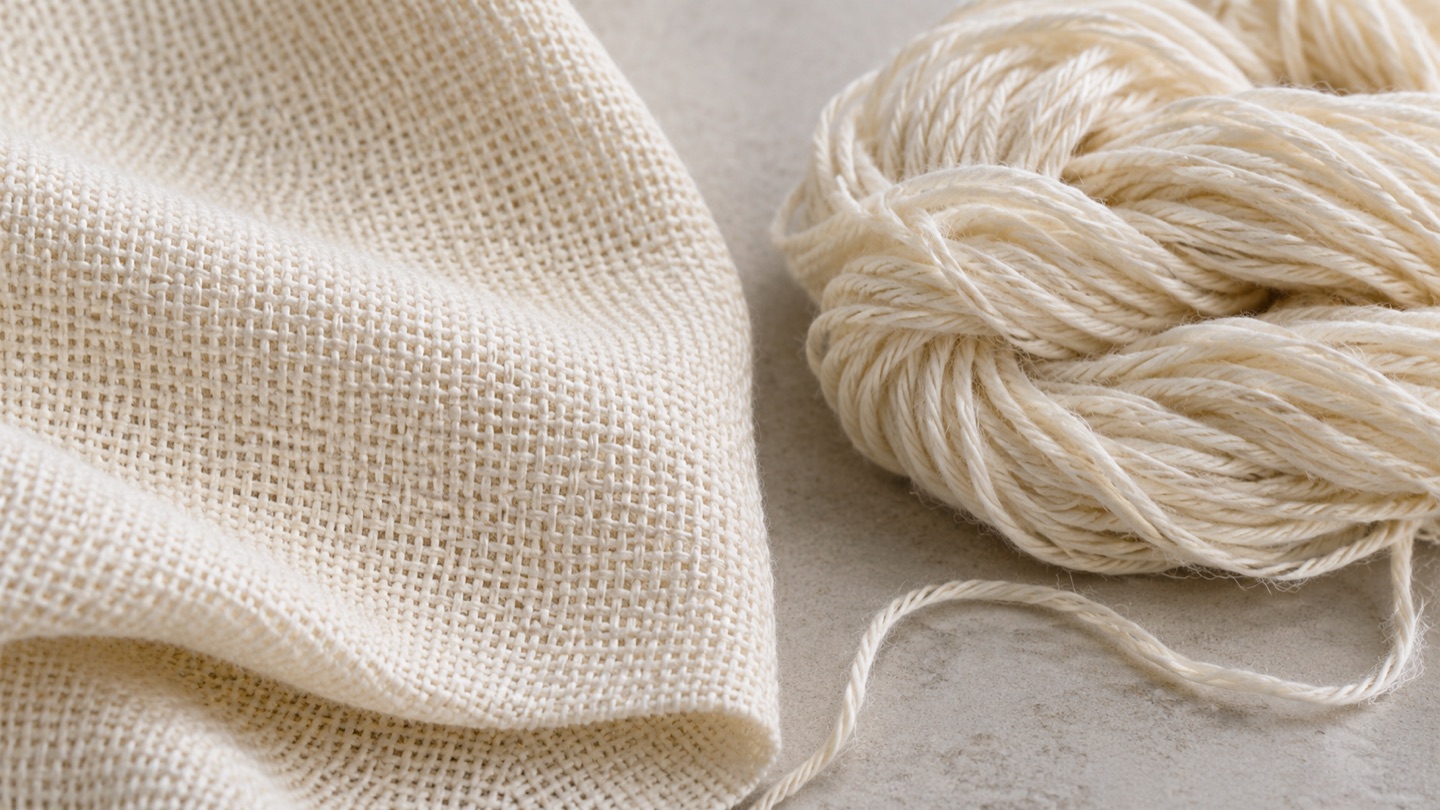
Cotton yarn beside woven fabric
Two-ply cotton uses two single yarns twisted together. Plying can help a yarn meet a strength or evenness requirement, but the finished fabric can still wear, pill or change in the wash for other reasons. Treat ply as a construction detail. Compare the fabric evidence before paying more for it.
Compare the yarn and the fabric separately
A single-ply yarn is one strand of spun yarn. A two-ply yarn combines two such strands. Those strands can be fine or coarse, so the ply label alone does not tell you the finished yarn size or fabric weight. In woven cloth, ask whether the claim applies to the lengthwise warp, crosswise filling or both. For the separate question of how woven yarns are counted, see the thread count guide.
When comparing two fabrics, look for comparable fiber composition, finished yarn size, weave or knit, fabric weight and finishing. If those differ, an observed difference in wear cannot be assigned to ply alone. Even comparable yarn-strength measurements address a different question from abrasion, pilling or wash changes in a finished item.
Ask for the result that matches the wear you care about
- Sheets: Compare fabrics for the same use and care conditions. If you’re concerned about rubbing or fuzzing, ask for a finished-fabric abrasion or pilling result. For changes after laundering, ask what was measured and under which wash and dry conditions. See the sheet durability guide for other sheet-specific checks.
- Woven cotton shirts: Look for results relevant to the fabric and the wear you see, such as rubbing at cuffs or changes after washing. A yarn-strength claim does not tell you how a seam or finished cuff will hold up.
- Knit T-shirts: Compare like knits and look for evidence suited to the fabric and its stretch. A method intended for woven fabric may give an unsuitable comparison on a highly extensible knit.
A useful comparison identifies the products or samples, the test method, the test conditions and what the result measures. If all you have is the ply label, the durability comparison remains open.
Frequently asked questions
Is two-ply cotton made of two layers of fabric?
No. Two-ply describes two single yarns twisted together into one yarn. Fabric layers are a separate construction detail.
Does two-ply cotton always last longer?
Ply alone cannot tell you that. Compare the intended use and finished fabrics under the same relevant test conditions.
Can I use sheet tests to judge a knit T-shirt?
Choose evidence for the knit and the kind of wear you care about. A grab-strength method used on woven sheets is not generally recommended for high-stretch knits.
How this guide was prepared
We separate verified definitions from editorial interpretation, state important limits, and update the page when stronger primary evidence becomes available.
Sources and scope
- Yarn Ply, Counts and TreatmentsCottonWorks
Yarn construction and the use of plying for strength and evenness.
Accessed 2026-11-04 - Garment DurabilityCottonWorks
Strength, abrasion, pilling and the conditions that affect fabric performance.
Accessed 2026-11-04 - D5034-21(2025): Breaking Strength and Elongation of Textile FabricsASTM International
Public scope and significance sections distinguish fabric grab strength from yarn strength and describe limits for high-stretch materials.
Accessed 2026-11-04
Questions & discussion
Share a question or a useful experience about this guide. Comments appear immediately. Your name and comment are public. Email is optional and stays private; reply emails are not enabled yet. Comment privacy.